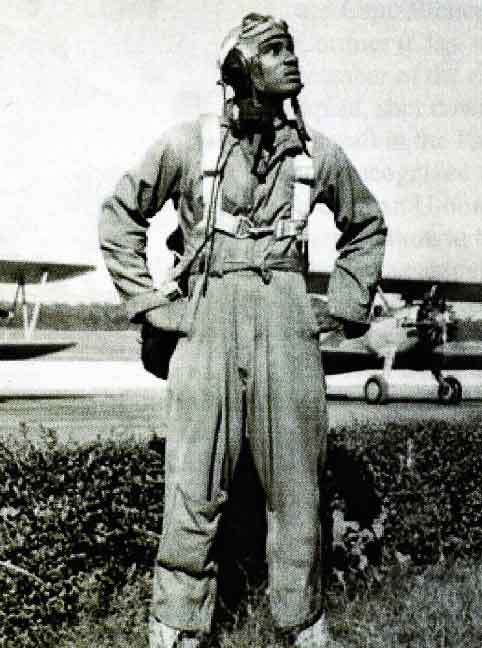
Dr. Wendell Lipscomb — Department of Special Collections, San Diego State University Library.
ARG has conducted epidemiological studies of alcohol and health services since 1959 when Drs.Wendell Lipscomb, a physician, epidemiologist and former instructor for the Tuskegee Airmen during World War II, and Genevieve Knupfer, a psychiatrist and sociologist, started the California Drinking Practices Study, a grant from the National Institute of Mental Health (NIMH) to the California State Department of Public Health.
1959
Drs. Wendell Lipscomb and Genevieve Knupfer received an National Institute of Mental Health (NIMH) grant.
1968
The growing organization named itself the Social Research Group, led by Dr. Don Cahalan. It was affiliated first with George Washington University, the West Coast Division of the Social Research Group, later becoming a unit within the School of Public Health of the University of California, Berkeley.
1971
NIAAA T32 training grant was awarded with a grant entitled “Graduate Research Training on Alcohol Problems” from the National Institute on Alcohol Abuse and Alcoholism (NIAAA; grant T32AA07240).
1977
The Social Research Group became one of the first of, at that time, five National Alcohol Research Centers receiving P50 AA05595 funded by NIAAA.
1981
The Social Research Group becomes the Alcohol Research Group (ARG).
Under the leadership of Robin Room, PhD, the group emphasized its alcohol focus by becoming the Alcohol Research Group (ARG) and became affiliated with the Medical Research Institute (MRI) of San Francisco, later the California Pacific Medical Center Research Institute (CPMCRI).
1994
With the departure of Room, ARG, now under the direction of Dr. Raul Caetano, moved to the Western Consortium for Public Health (WCPH) and in 1997 the ARG Center and projects were integrated into the Oakland-based non-profit Public Health Institute (PHI).
1999-2001
Tom Greenfield, PhD is appointed Center PI on the departure of Dr. Raul Caetano. In 2001, the Center Grant is re-awarded to December 31, 2005. Dr. Marjorie Robertson and then Tom Greenfield serve as Executive Directors of ARG. Cheryl Cherpitel, DrPH, and Lee Kaskutas, PhD, serve as Center Associate Directors and Lee becomes the Center Training Director.
2006
ARG Center is re-awarded through to December 2010.
2008
Dominique Lampert becomes Executive Director of ARG, while Tom Greenfield is its Scientific Director.
2011
ARG’s Center is re-awarded as a P50 Center Core Grant. The current NIAAA supported Center is now in its 35th year.
Cheryl Cherpitel, PhD, becomes Director of the WHO Collaborating Centre on Alcohol Epidemiology and Injury.
2013
Sarah E. Zemore, PhD, joins Lee Kaskutas as a multiple PI on the Training Grant.
2015
ARG’s Center is re-awarded as a P50 Center Core Grant. William C. Kerr, PhD, and Sarah E. Zemore, PhD, assume new roles as Associate Directors on the Center Grant. Sarah also becomes the Center Training Director.
2016
Sarah E. Zemore leads ARG’s award submission for another T32 grant and is successful.
2021
ARG receives a National Institute on Alcohol Abuse and Alcoholism (NIAAA) grant to support the continuation of the National Alcohol Research Center under the direction of William C. Kerr, Director and Nina Mulia, Associate Director. The funding will allow the Center to further its work to 2026.
2022
Under the leadership of William C. Kerr, ARG receives another NIAAA T32 Training Award, taking the program into its 50th year.
2023
Tom Greenfield steps down as scientific director. William C. Kerr is appointed scientific director and Priscilla Martinez, deputy scientific director.